

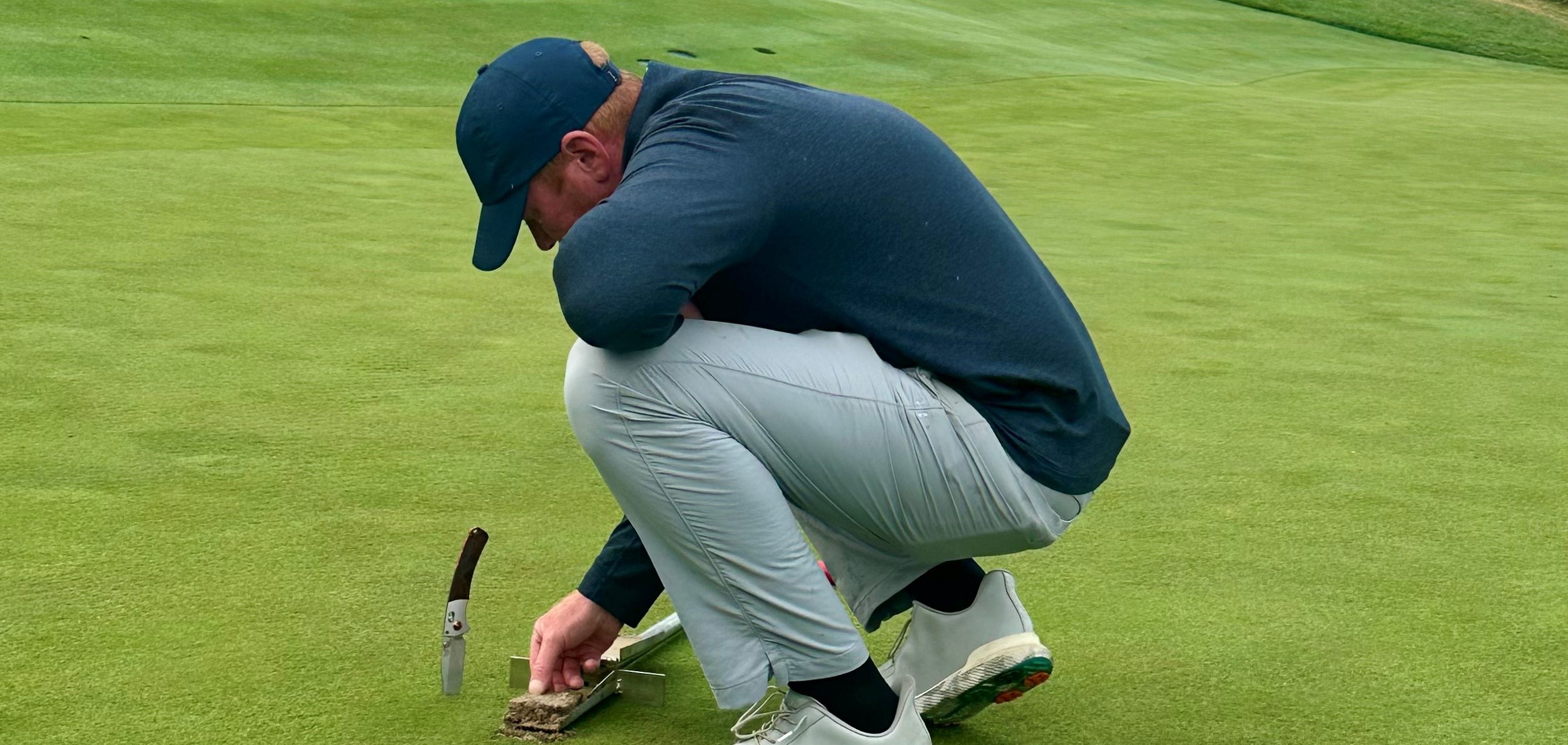
A self-proclaimed, sometimes “mortician”, Steve McDonald and his firm Turfgrass Disease Solutions, are agronomy professionals offering a variety of consulting services to golf courses focused on turfgrass issues. He prefers advising clubs on preventing diseases and says: “While the name of my company is Turfgrass Disease Solutions- it is important to remember that any deviation of normal performance or health could be considered a disease.”
Like most golfers, I have a casual interest in turfgrass varieties, as a way of comparing courses. Knowing that turfgrass research is developing rapidly, I asked McDonald “what’s new?” He said: “There is so much development here. The grasses that were/are used that are 8-10 years quickly become obsolete to modern grasses. They are being bred for disease resistant, heat tolerance, texture and other positive attributes. The bentgrasses are really good but they have nuances- they like full sunlight relative to a mature older bentgrass and they like warm weather and can be slower to grow in the spring months relative to some older grasses. Recently there has been some development in seeded Poa annua (sometimes referred to as Poa annua reptans or a perennial) types and I have seen a few golf courses successfully use this for some niche putting green uses. The real grass breeding efforts have been made in tall fescue, Kentucky bluegrass, bermudagrass and some newer Zoysiagrass. We are seeing warm season grasses fill some new and niche uses farther and farther north. Where I do most of my consulting, there is no ideal grass species. A big part of what I help clients with for renovations is helping them to pick the best grass (not perfect, because none are perfect). If there was a perfect grass for most climates, you would see everyone using the same grass.“
When I asked McDonald about the disease issues he sees most and how one can spot disease, He emphasized that disease is any normal deviation, such as dry spots or fungal disease. Further, he notes that a typical golfer may not recognize the disease, but would observe that “something is wrong.” McDonald recommends using good fungicides following a preventive program and applications of plant protection materials could be in order every 7 to 28 days.
With water such a prominent issue, I asked McDonald how his clients are working to reduce water usage. He listed the following measures:
- More efficient irrigation systems
- Underground storage vaults for well water (vs. purchased water)
- More “high grass” (native areas)
- Using “warm season” grasses where able, which can save 10% to 30% versus “cool season” grasses
- Ceasing maintenance on areas of the golf course not frequently used (i.e. back tees)
- Eliminating irrigated turf areas
- Reducing Overseeding
I asked McDonald what he sees as solutions for achieving long-term sustainability for golf courses given the current trend of “the space race” where striving for perfection stresses both economics and agronomics. His answer was interesting: “I am not sure- demands will have to change. Expectations at all levels are extremely high. There is no easy talking point on this one. There will always be high end facilities- no doubt that will have the resources to produce the conditions that they want. The concern is that a large percentage of courses will have to change inputs at some point and these include water, nutrients, mechanical, labor, and pesticides. What could change this quickly would be pesticide restrictions at the State or Federal level. Superintendents are innovative and would likely quickly figure out a way to maintain golf courses to the best level that they can. ”
When I asked McDonald about the impact of climate change, he shared that the lake west of Philadelphia he grew up ice fishing on hasn’t frozen since 2000 and observed that we now experience heavier rainfall events, along with longer dry periods. His response is to have better drainage, better irrigation and scout for new pests.
In closing, I asked McDonald what he sees as the most challenging issues in turfgrass maintenance and he listed the following five “big ones”:
- Unrealistic expectations from golfers
- Failing infrastructure and lack of generational planning
- Attracting people to work and care for golf courses
- Long work hours and salaries
- Water use in some climates
At the end of our conversation, Steve and I decided we needed to make a golf date. I’m really looking forward to what I can learn “in the field”.
