
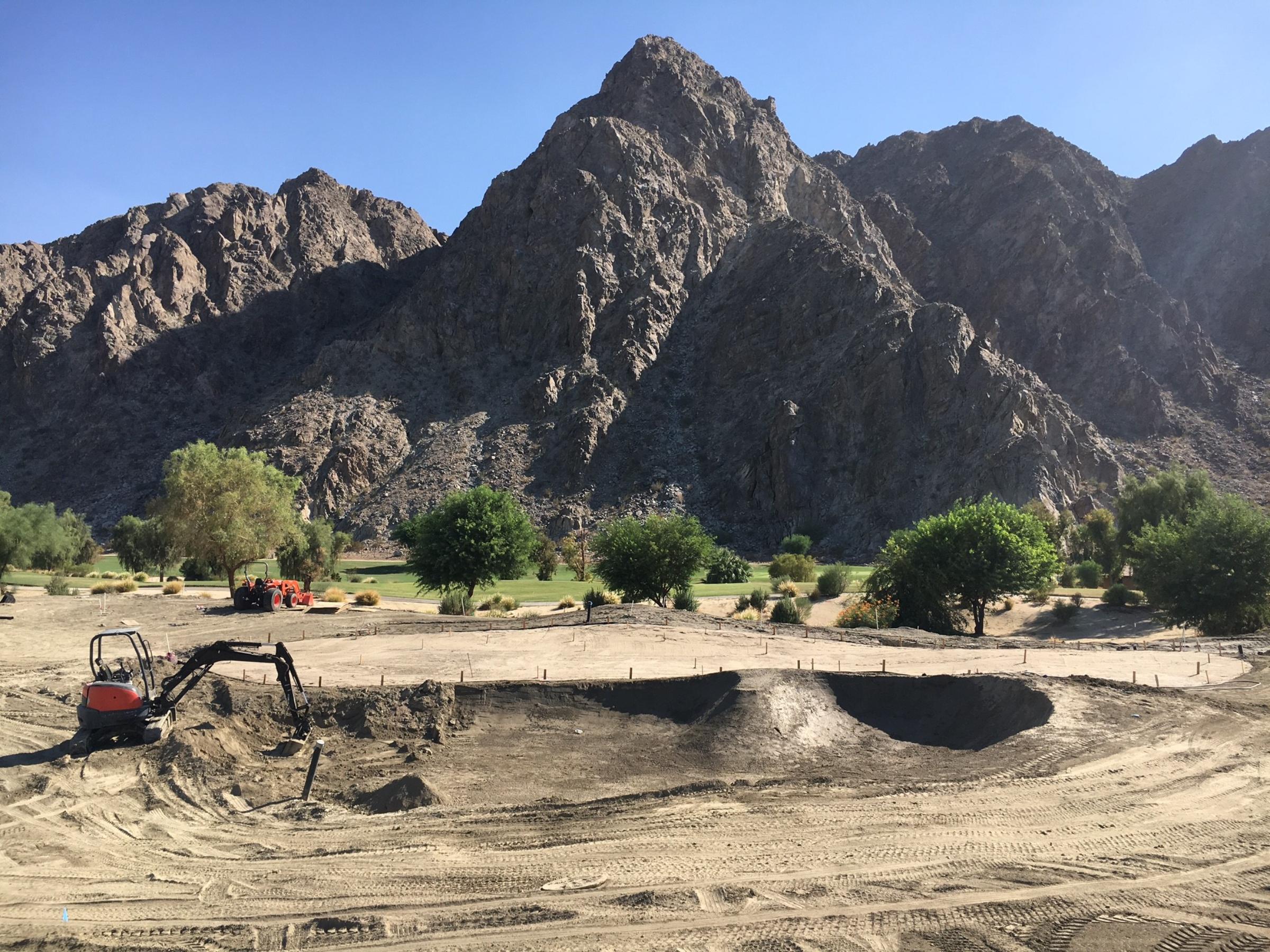

I was recently introduced to a startup company (Green Lake Golf), dedicated to the concept of sustainable golf courses – both environmentally and economically. Having a keen interest in the sustainability of golf, I sought to learn more. They focus on helping golf course owners with excess turf reduce that for maintenance enhancements and those with excess land unlock it for potential development. One of the company’s principals is Jeff Schwinkendorf, a golf construction industry veteran who I had the chance to speak with and learn more about what Green Lake (GLG) does.
As a new entry into the golf business, I wasn’t familiar with GLG, and my first question addressed how it came to be. Jeff responded that “It’s an approach which has actually been evolving on paper for a number of years by being around the golf course development business and recognizing that there were paths to achieve aspects of development (or in this case redevelopment), which were not being considered at the time. The general application of what’s been derived in our business model has become ever-increasingly relevant and common-sensical in light of recent and forthcoming water restrictions and their effects on the golf course industry.” It’s obvious that GLG is thinking ahead, especially in the area of golf course water usage and in enhancing the highest and best use of any golf related site through an integrated approach to golf and adjacent development. They have combined expertise in golf, legal consulting, real estate and environmental disciplines to address both environmental and economic issues experienced by golf course owners and clubs.
Schwinkendorf emphasizes both sustainability and profitability. While in some cases it’s simply about reducing both the use of and cost of water, often by eliminating some irrigated turf, he mentioned that GLG is sometimes contracted to “unlock” developable area on the site for “non-golf, sustainably-led redevelopment. “He points out that “there may be occasions in which GLG is evaluating a property for redevelopment and finds that alterations to the golf course may not be necessary in order to “unlock” developable area.” Change often being a dirty word, it’s imperative that with the present and future environmental and economic challenges faced by many golf courses, sustainability can have multiple meanings and thinking outside the box is imperative. That can mean fewer holes or smaller fairways and greens.
Reducing the managed turf footprint is a priority. This leads to both water and cost savings as well as the potential for larger redevelopment areas for alternative (and hopefully profitable) uses. As an example, in Arizona a typical golf course may use 200 million gallons of water annually to maintain 90-100 acres of turf (170,000 gallons per acre per month). Eliminating just 10 acres of turf can reduce water usage by 20 million gallons annually and eliminate not only the associated cost of water but also the related labor, chemicals, equipment wear, etc. GLG has calculated that eliminating 10 acres of turf and using that same acreage for residential development requires just 22% on average of the water needed by the 10 acres of turf. With reduced costs of maintenance and the potential for profit from the “unlocked” adjacent development, the project can become not only more environmentally sustainable but also economically profitable.
When I asked about typical design challenges, Schwinkendorf indicated that providing additional taxable property along with the environmental benefits has eased the path to permitting and he argues that the golf experience is enhanced and that even with potentially fewer holes (9, 12, 15?) as a possibility more property could be made available for inclusion.
When I asked about the impact on cost to the member/golf consumer, Schwinkendorf said that rather than immediate savings or discounts, more likely is the mitigation of the owner needing to increase prices in the future due to surging water costs or other factors.
Advantages cited include the potential of an enhanced bottom line along with conceptually being the responsible path forward regardless of whether the course is in areas where water is precious and expensive or where it will become so in the future. The one disadvantage mentioned was the prospect of CHANGE which often causes negative reaction from golfers/members/residents. Schwinkendorf emphasizes the importance of messaging in these instances. The environmental community has responded favorably to turf reduction and this has sometimes made permitting for alternative development more achievable.
