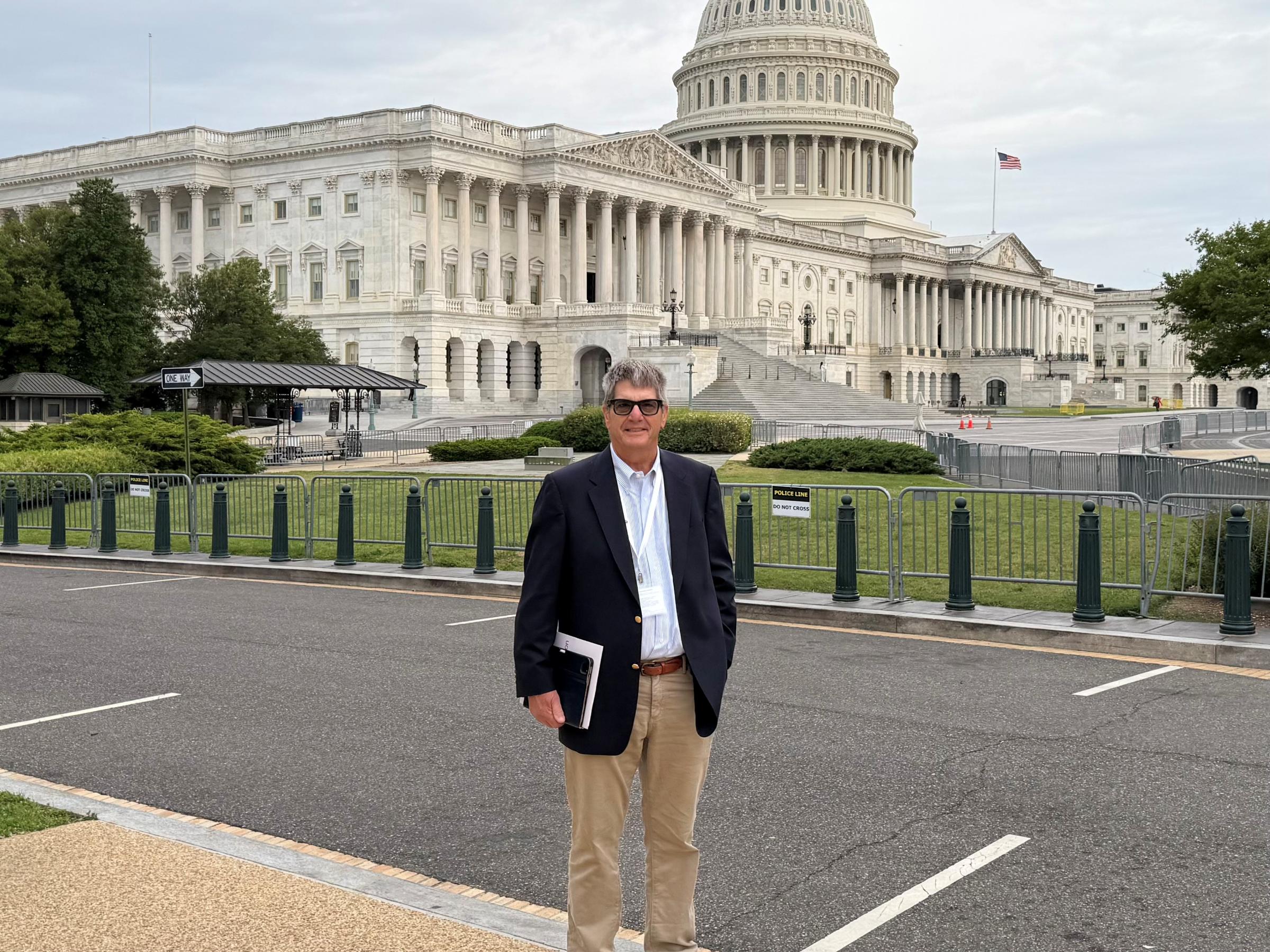

Golf is a big business. In addition to the 48.1 million Americans age 6+ that played golf on-course or off in 2025, direct and indirect economic impact was $226.5 Billion, supporting approximately 2 million jobs. Earlier this week, I was privileged to participate in National Golf Day, an initiative by The American Golf Industry Coalition (AGIC) to highlight our benefits to political leaders. More than 300 of us from the industry visited the capitol and met with congressional legislative staff to share those legislative issues of most importance to the industry.
These included:
- The PAR Act
- CSE Exemption to the H-2B cap
- The PHIT Act
- Funding for a Turfgrass Economic Value Statistics Study
The Parity for Athletic Recreation (PAR) Act (H.R. 1583/H.R. 583), introduced in the 119th Congress (2025-2026), aims to amend the Internal Revenue Code to remove golf courses and country clubs from restrictions that exclude them from federal disaster relief, economic stimulus programs, and opportunity zone benefits. [1, 2, 3]
Key Aspects of the PAR Act (H.R. 1583):
- Purpose: To treat private and commercial golf courses as other hospitality businesses (restaurants, hotels) regarding tax incentives and federal aid.
- Targeted Regulation: Specifically strikes language from Section 144 of the Internal Revenue Code that has restricted these businesses since 1976, a restriction that often prevented aid following natural disasters like Hurricane Katrina.
- Industry Support: Supported by the American Golf Industry Coalition (formerly We Are Golf) to ensure parity, particularly for redevelopment opportunities.
- Status: Reintroduced in the House of Representatives as H.R. 1583 in the 119th Congress. [1, 2, 3, 4]
The bill is designed to address a long-standing issue where golf facilities were ineligible for certain economic benefits, enabling them to participate in future relief legislation. [1, 2] Significantly, this grouped golf courses, specifically by name with massage parlors, hot tub facilities, suntan facilities, race tracks and gambling or any store where the principal business is the sale of alcoholic beverages for consumption on premises.
Clearly, golf does not belong in that group.
The golf industry also supports language in the FY 2027 Department of Homeland Security budget creating a Certified Seasonal Employer (CSE) H-2B cap exemption making it easier to hire migrant workers. This is an obvious one to those familiar with golf and club staff, especially in service and golf course maintenance areas.
The Personal Health Investment Today (PHIT) Act of 2025 (S.1144) is bipartisan legislation that would allow Americans to use pre-tax Flexible Spending Accounts (FSAs) and Health Savings Accounts (HSAs) for qualified sports and fitness expenses, such as gym memberships, youth sports fees, and exercise equipment. AGC aspires to have golf included so that health savings funds can be used for the purchase of golf equipment, lessons, green fees, etc. In addition to the physical benefits, golf boosts mental health with 95% reporting increased mental well-being after playing golf and 82% reporting improved relationships with family and friends.
Lastly, AGIC is encouraging Congress to approve funding for a national Turfgrass Economic Value Statistics Study to provide data on the true size and scope of natural turfgrass, which is believed to be the nations third-largest crop. This is not exclusive to the golf industry but impacts many other areas as well. The study would compile data on total turfgrass acreage, use categories and numbers of each, employment, equipment sales and overall impact.
Golf has a big impact and there are many more statistics I could share. I invite those interested to learn more by visiting the AGIC website and encourage your congressional representatives to support these worthy legislative initiatives.
