
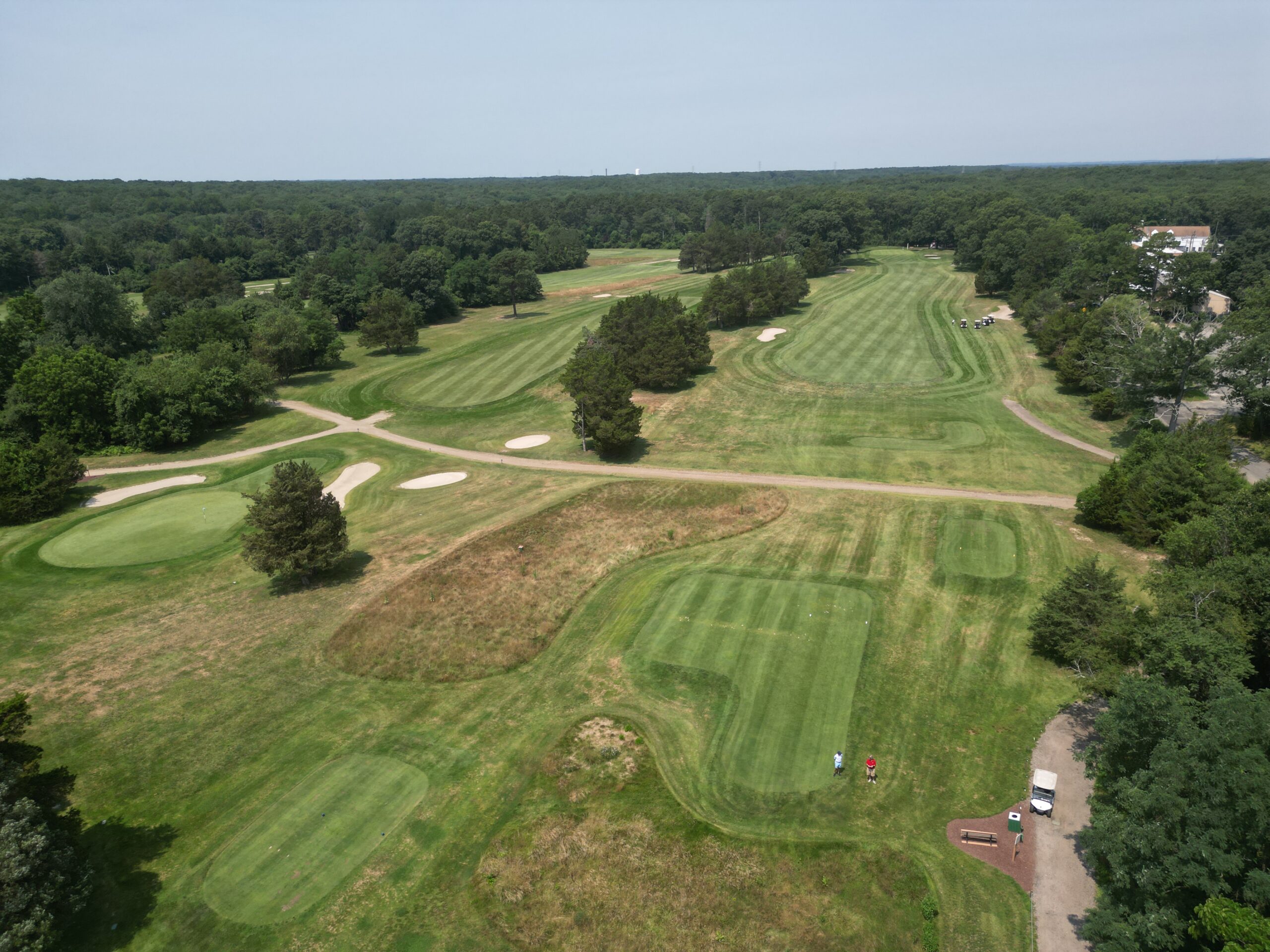

Last week’s news that July, 2026 was the hottest month ever recorded in the United States (3+ degrees Farenheit above normal) made me wonder about how golf courses will cope. In order to find out, I consulted two experts, Terry Buchen of Golf Agronomy International and Steve McDonald of Turfgrass Disease Solutions. Both consult regularly with courses around the nation and I figure would be the perfect people to look into the future of how golf course superintendents will deal with escalating temperatures.
I asked each a series of questions to get a look at how golf courses are responding to climate change. McDonald, based in Eastern PA, indicated that warm season grasses are being used farther and farther north, such as sodding bunker edges with Zoysiagrass in places like PA, NY & NJ and for practice area target greens in MA & IL. He emphasizes paying attention to growing environments and “microclimates” wherever possible. Asked about the use of warm season grasses, McDonald said “20 years ago, no course in Philadelphia had a Bermudagrass driving range tee. Currently, in my experiences in the Philadelphia and DMV regions is that most courses use Bermudagrass for the summer driving range tee.” Both Buchen and McDonald suggested that the new “super bents”, along with other turf types and varieties, are more drought tolerant with better root systems, more disease and insect resistant will replace the older varieties, especially in renovations and new construction. Buchen emphasized especially in the transition zone, and even in some mild-climate cool-season climates, especially on driving range tees the use of warm-season turfgrass could occur.
With the possibility (if not probability) of limitations on water use coming, Buchen emphasized that courses will be focusing on irrigation upgrades and changes in practices. McDonald mentioned the burgeoning use of sensor technology, high grass establishment and focusing on high priority areas. He cautioned that all this can be costly. He sees increased labor costs directly from higher temperatures and contributing to the rising cost of golf. I’ve always wondered whether courses would change their conditioning specifications. McDonald said: “Many look harder at the plant protection programs as disease pressure is impacted. Mechanical inputs and using smaller machines when and where possible can help to reduce stress. Again, back to one of my previous points- if you get the growing environments right, a lot will fall into place.” Buchen said: “Reducing or eliminating irrigation in the native and maintained roughs. Installing wells, hooking up to treated sewage effluent water sources will be in the plans.”
Since McDonald is an expert on turf diseases, I asked about whether there were any new ones emerging. He said: “I do not feel we are seeing any new diseases, just shifts in time of the year – fairy ring has always been a problem for example, but we see it being more of an issue for longer periods of the year or more severe. There are some new weeds showing up farther and farther north with this trend- for example, green false kyllinga which rarely was a problem north of VA 25 years ago, is now being observed in the NY Metro region and north.”
Most golfers are focused on playing conditions. Maintaining what we’ve become used to will depend on labor budgets. Labor represents 60% on average of the overall maintenance costs. “Autonomous mowers or robots and the impacts of costs have been and will continue to revolutionize golf course care. While these can help to reduce reliance on labor and mow more consistently there are some other challenges that I would not suggest a golf course significantly cut labor costs- what happens if the course losses power for 7 days due to a big storm? They can not mow over leaves and debris in the autumn. What I am getting at is there will always be a need for manual labor which is the costliest line item in every golf course budget.” Buchen focused on the future need for more hand watering and its impact on labor costs along with the use of more wetting agents. He said to expect more courses to raise mowing heights and mow less frequently and that maintaining the playing conditions we’ve become accustomed to would be “difficult at best” without dramatic increases in budgets.
McDonald says the biggest threat from climate change is managing golfers’ expectations. Many golfers do not understand golf course management at the highest level, nor do they understand that the golf course is subject to weather 24/7/365. These additional stressors will place challenges for management at all levels. Buchen noted the biggest threat as increased labor costs, courses forced to re-grass with more drought tolerant turf, as well as reduced maintenance conditioning standards.
It’s obvious that the threat of climate change to golf course conditioning is real. Choices will be made as to whether to maintain the high level of conditioning that many courses strive for versus budgetary concerns. The impact is both economic and on golfer expectations.
