

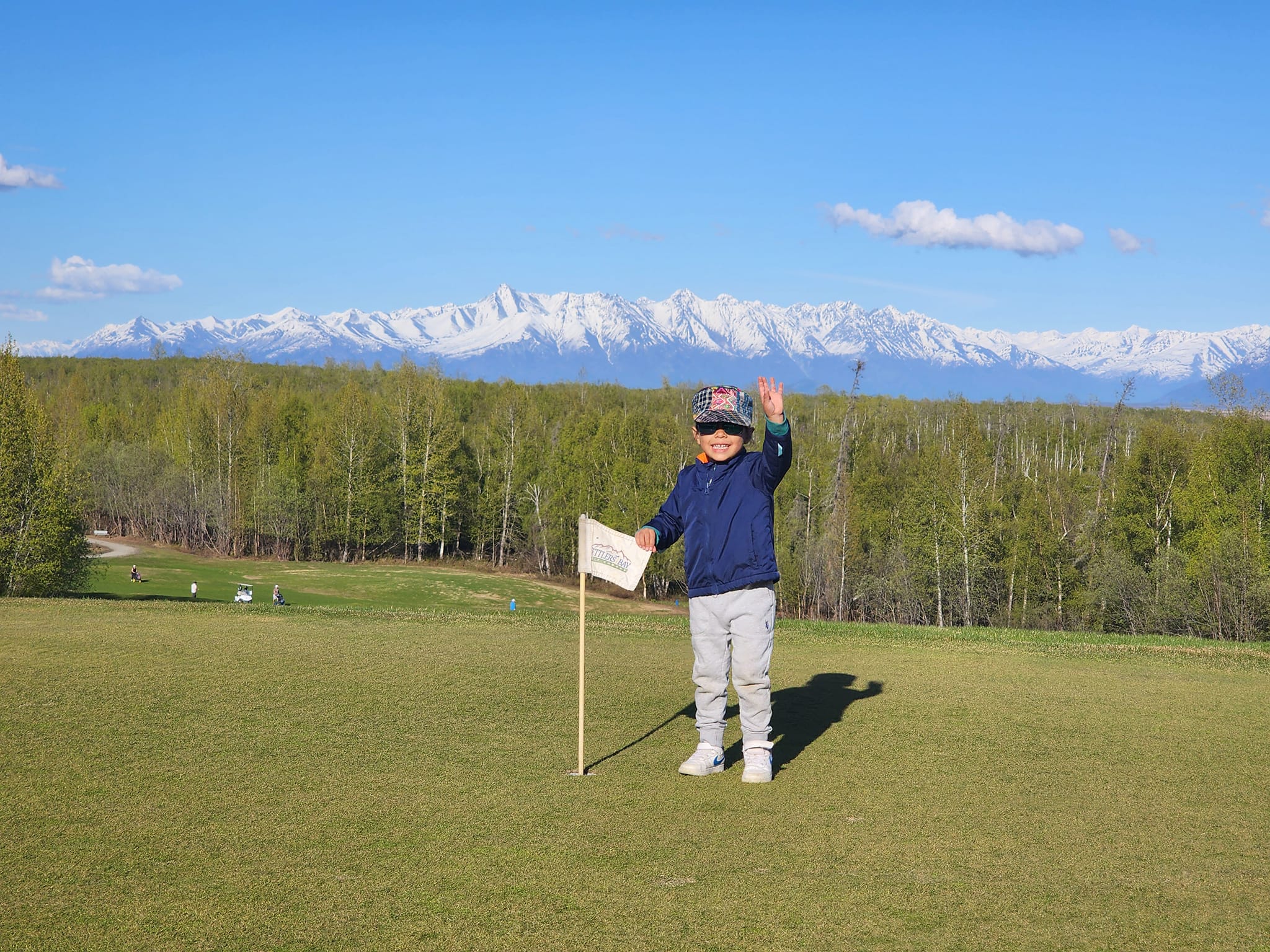
Alaska’s population is only 740,000 and the climate allows for only about 5-6 months of golf (even in the southern portion). It wouldn’t seem to offer many options for golfers. However, Golf Property Analysts was recently retained to provide consulting services for a course in Alaska seeking to expand its business and it proved to be a very interesting and challenging assignment.
So, what did we learn?
Alaskans do play golf. While there are only 19 golf courses (13 of which are only 9-holes), there are (according to the National Golf Foundation) 55,000 Alaskan golfers generating 350,000 rounds (2024) annually, or about 6.4 rounds per golfer. With 243 total holes, (equating to 13.5 18 hole equivalents) that calculates to nearly 26,000 rounds per every available 18-holes. While the season is limited and the golf weather not always ideal, during the season one can play for extended periods with the daylight between sunrise and sunset exceeding 18 hours for 60 days in midsummer and sunset after 11:00 PM for the period between May 22 and July 20 in Anchorage, the state’s largest city. One course had a sign on the door requiring the return of all golf carts to the clubhouse by 10:30 PM.

With most courses clustered around Anchorage, Fairbanks and in the Southeast Alaska “panhandle”, some may have to travel a good distance to play because Alaska is BIG. The drive from Juneau in the southeast to Fairbanks just south of the center of the state is over 17 hours and from Anchorage is nearly 6 hours. We also observed that it’s prudent to ensure you have plenty of gas as there can be considerable distance between fueling locations.
Alaska golf courses are known for their unique wildlife encounters, with moose, bears, and eagles frequently spotted on or near the fairways. Other wildlife, such as foxes, wolves, lynx, and even sheep, can also be seen. Golfers in Alaska often have the chance to witness wildlife during their rounds, adding an exciting and unpredictable element to the game. Golfers are often permitted by local rules to take relief from wildlife hazards. While one superintendent I spoke with mentioned that while they sometimes need to “shoo” the animals away, he hasn’t experienced any attacks or injuries. The biggest problem caused by wildlife is Moose damage on greens leaving tracks. Dylan Dethier chronicled this a few years ago in this article for Golf.com.

Temperatures (Anchorage) reach average highs in the mid 60’s (F) only in June, July and August with mid 50’s in May & September. July through October is considered the rainy season averaging nearly 2 to just over 3 inches per month. The growing season is typically only from June 1 to just before the end of September (Southern AK), leaving limited time for regrowth after winterkill (Ice) which is commonly regarded as the biggest maintenance challenge. A common practice is for courses to cover their greens for the winter to maintain a higher soil temperature. In the northern areas where permafrost exists, frost heaving is often found and in the southern areas there can be temporary heaving in the springtime. Conversely, the long daylight hours for growing often allow for expeditious germination and growth.
Playing conditions, as one might expect are (like most places) weather dependent. While many winters provide a blanket of snow that protects the turf (usually bentgrass or fescue) the most recent winter season was warmer than normal and the resulting rains created a covering of ice in many places that caused widespread winterkill that even in July some courses are still recovering from. Despite a limited growing season, playing conditions were quite acceptable and in particular most greens were very good. Other than some winterkill (Fusarian) courses in Alaska experience very little disease.
With its breathtaking natural beauty and vast rural areas, Alaska is home to many outdoor advocates and less formal folks and I could find no record of any private golf or country clubs in the state. Accordingly, golf is very casual, without some of the dress codes and other rules we see at most courses. In several cases, I saw golfers accompanied by their dogs, in one case running alongside the golf cart. Based on the courses we researched and visited, cart usage is consistent with national averages at around 2 in 3 golfers preferring to use a cart as opposed to walking.
I got to play two courses in Alaska during my trip and found both to be congruently challenging and enjoyable. Both were walkable, in very playable condition (despite the difficult winter) and provided a scenic environment unique to anything I’ve previously experienced. Given the early-mid July temperatures, it felt very much like my many trips to Scotland and looked like golf in the Rockies or Tetons. While we didn’t experience much wind, a little rain was thrown in for good measure. Golf in Alaska was very enjoyable. It can be a great addition to the typical Alaskan adventure and I’d advise taking your clubs if the time to play permits.
