
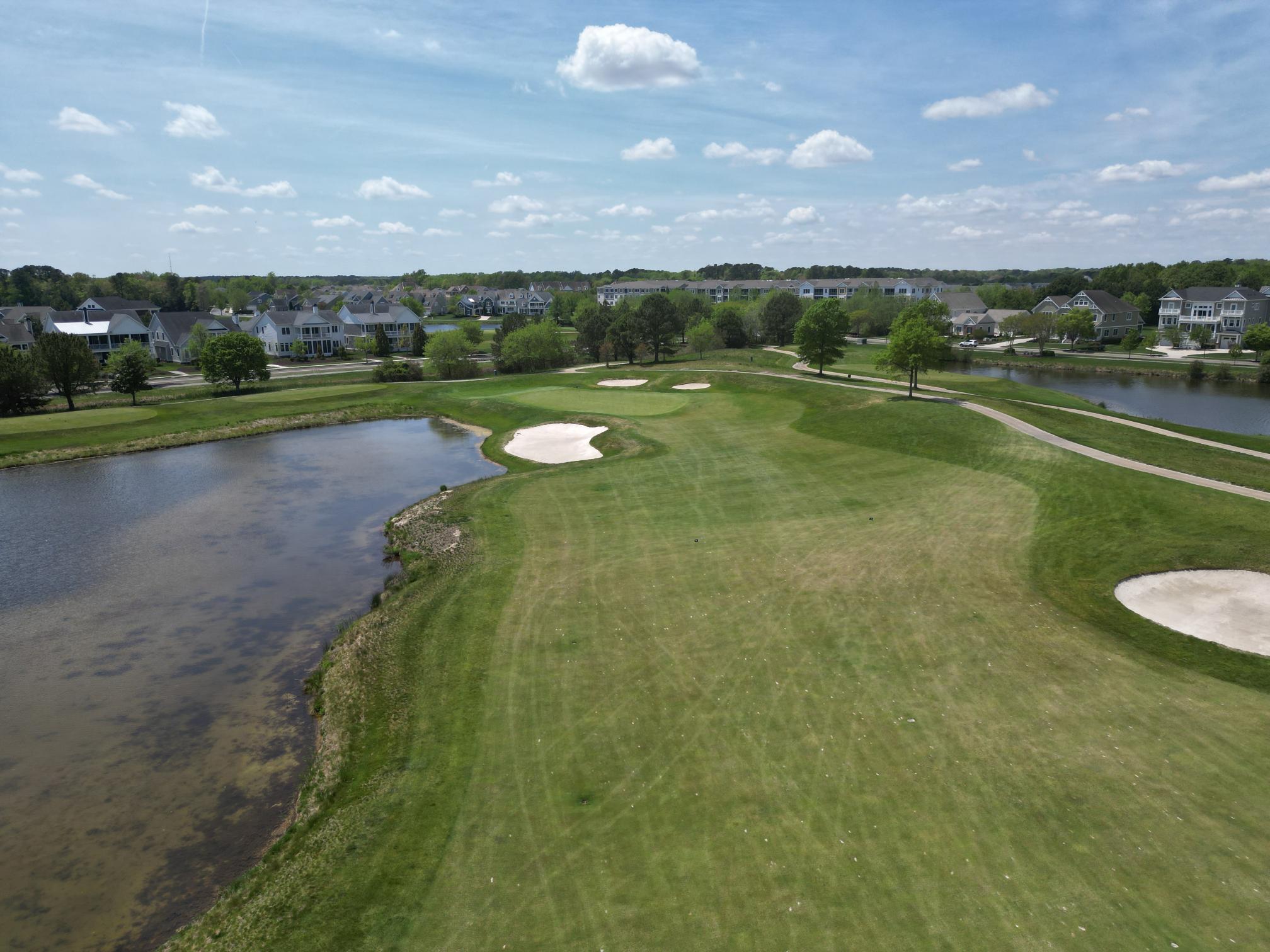

It comes as no surprise that maintaining a golf course is expensive, and the cost is increasing. It’s always seemed somewhat arbitrary to me how much different golf courses and clubs spend on maintenance. How do we know what it should cost to maintain any given golf course? This question arose in a recent litigation where I served as an expert witness.
The case involved a partnership dispute where the value of the upscale, multi-course private club was in question. Our appraisal and that of the appraiser for the opposing side were considerably different with one main area of contention the golf course maintenance costs. With capitalization rates typically in the 10-11% range, a difference of $500,000, can relate to $5 million in value. For a multi-course club the numbers can be greater.
In the recent case referenced, actual maintenance costs equated to about $1.7 million per 18-holes, and there were comparable clubs (both investor-owned and member-owned) that supported that level of expenditure. Unfortunately, my counterpart, seemingly in an effort to inflate the value conclusion, estimated appropriate maintenance costs of about 30% less for use in his analysis. The impact on his conclusion of value was quite significant.
Most certainly, maintenance budgets can be and are often developed based on a club’s analysis of what they feel they can afford. There are numerous variables, ranging from maintenance specifications (cutting heights, frequency of various tasks, size of work force, equipment budget and more) to the size of the golf course (acres of maintained areas), turf types, climate and cost (if any) of water.
While we’re rarely able to compare maintenance budgets from one course to another in a precise, mathematical manner, it is possible to use comparisons of courses in similar climatic regions, with similar desired conditions in a subjective manner. This accomplished by not only surveying competitive clubs about their maintenance costs and what is included, but also by consulting with the Golf Course Superintendents Association of America (GCSAA), which publishes surveys of their members on golf course maintenance costs.
Among the most interesting elements of analyzing golf course maintenance budgets is what is and isn’t included. For instance, is equipment included? Sometimes, it’s leased other times owned. Even if owned, a cost should be associated. Does the course have to pay for water? What is the season and what is the level of conditioning desired? Some benchmarks that can be helpful include analyzing the maintenance cost per acre, per round, per member or as a percentage of gross revenue. It’s important to use relevant comparisons.
Among the metrics used in the GCSAA survey are region, % of gross revenue, labor cost, water cost and cost per acre. Only data from 18-hole facilities was used to avoid outliers. The study was also segmented by the type of facility (municipal, semi-private, private, daily-fee).
It’ll come as no surprise that some clubs overspend on maintenance and others don’t spend enough. Maintenance costs have most certainly contributed to the dramatic increase in the cost of membership and green fees in recent years. Some clubs, usually member-owned clubs, will (seemingly intentionally) overspend on maintenance to achieve “bragging rights”. At some clubs there is overspending resulting from fraud, such as kickbacks from suppliers or non-bid supplies and contracts made with members or their friends vendors. I’ve often found it interesting to calculate how much is spent on golf course maintenance for each round of golf played, or per golf member.
Labor is clearly the most significant part of golf course maintenance costs. Nationally, at all types of courses, according to GCSAA labor constituted nearly 60% of maintenance costs in 2024. Other significant expenses include equipment, and equipment repair & maintenance, fertilizer & chemicals, fuel and lubricants and sand/soil/seed. As the impact on value is roughly 9-10 times each dollar saved or spent, learning as much as possible about the spending of competitive courses is critical, understanding the maintenance program is essential and making sound decisions can allow course owners and club leaders to get the best “bang for the buck” while providing the quality of product that is appropriate for the club and market. Even if the facility isn’t being sold, the impact of maintenance costs on value can be significant. As an example, real estate tax assessment s are based on market value. It’s not uncommon for courses and clubs to be over-assessed, often paying hundreds of thousands more in taxes than what is fair.
Because of the many variables, maintenance costs are usually discussed and considered subjectively. However, some objectivity can be added to the analysis and it can be helpful.
