

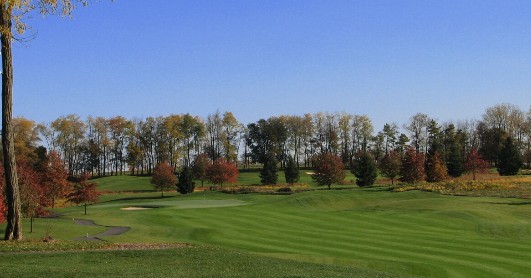
For most of my career in the golf course/real estate industry the issue of highest and best use has been prominent in a variety of situations. Highest and Best Use is most commonly defined as follows: The reasonably probable use of property that results in the highest value. The four criteria that the highest and best use must meet are legal permissibility, physical possibility, financial feasibility, and maximum productivity.
The COVID pandemic most certainly enhanced the economic feasibility of many golf facilities and slowed (and even reversed in some cases) the trend of golf course closures that had persisted for the prior 10-20 years. While most observers (including myself) perceive golf as generally healthy a disturbing (especially for golfers) dynamic of late has been the consideration of golf course sites for alternative use as AI Data Centers.
I recently learned of one such transaction in my hometown of Harrisburg, PA (This muni just sold for nearly $50 million. Here’s why other courses could be next) where Dauphin Highlands GC, developed and owned for many years by the Dauphin County General Authority has been sold for such a use. Not far away (30-45 minutes drive) in York, PA, the Briarwood Golf Course has been earmarked for a similar repurposing and the nearby Royal Manchester GC (also in York County) only escaped the same fate (for now) as a result of considerable public opposition.
Central PA has been especially hard-hit over the past 15-20 years by numerous golf course closures, some for other uses, and some not even being repurposed. A quick internet search also reveals courses meeting similar fates in Virginia, Minnesota and California and it seems I’ve heard of others as well. Golf courses often come up on the short end of the analysis for “highest and best use”.
For data centers, golf courses provide three advantages:
- Large Footprint: They offer extensive, relatively flat land needed for massive data center campuses.
- Market Value: Developers often offer significantly more money than the golf course’s operational value, making them attractive to owners.
- Infrastructure: Often located near existing power grids and fiber networks.
Conversely, there are some challenges:
- Community Resistance: Residents often protest due to concerns about increased traffic, noise, visual impact, and loss of recreational green space.
- Zoning Hurdles: Repurposing requires complex rezoning approvals, which can be politically challenging.
- Environmental Concerns: While some developers promise tree preservation, the large-scale industrial use differs from recreational land.
The larger question to those of us in the golf course industry is whether the golf industry’s recent surge is sustainable enough to withstand this trend. According to Golf Datatech, 2025 rounds are up 1.1% over 2024’s record through October (YTD). While that bodes well for golf, there aren’t many golf courses that can bring $50 million sale prices. How can golf courses be preserved?
Through the years, we’ve been involved in a several instances where developers placed open space conservation easements on properties and realized the income tax benefits from doing so. While an effective way to monetize development rights not planned for use this option can be cumbersome, expensive and take time, not to mention come under often counterproductive scrutiny of the Internal Revenue Service. Other options include either down-zoning the property, the sale or even gifting of development rights to a variety of entities, including municipal governments that often have funds for open space preservation. Do your homework. Know your options. It may not bridge the gap between the value of the golf course and $50 million, but who knows, maybe it’s enough to make it work?
The high demand for data centers, driven by artificial intelligence and cloud computing, is expected to continue, but such land conversion raises local concerns about environmental impact, water usage, and the loss of green space. In addition, we all know that golf courses are considered a community asset from the perspective of quality of life, attracting new businesses and population growth, which provides an economic incentive to preserve the golf course that can also contribute to bridging the gap between the property’s value based on continued use for golf and the alternative use, whether as a data center, residential development or some other alternative.
The bottom line here is that golf courses will always be challenged by the highest and best use question. While in some cases, alternative uses to some courses are neither reasonable or probable, the fact that the fields of dreams for our favorite game typically comprise sites of more than 150 acres which often attract surrounding development over time and (unfortunately) represent an inefficient use of land assets, they will always be targets for alternative use development.
I’m not ready to say that there will be any mass disappearance of golf courses again, but let’s not get “fat, dumb & happy”.
