
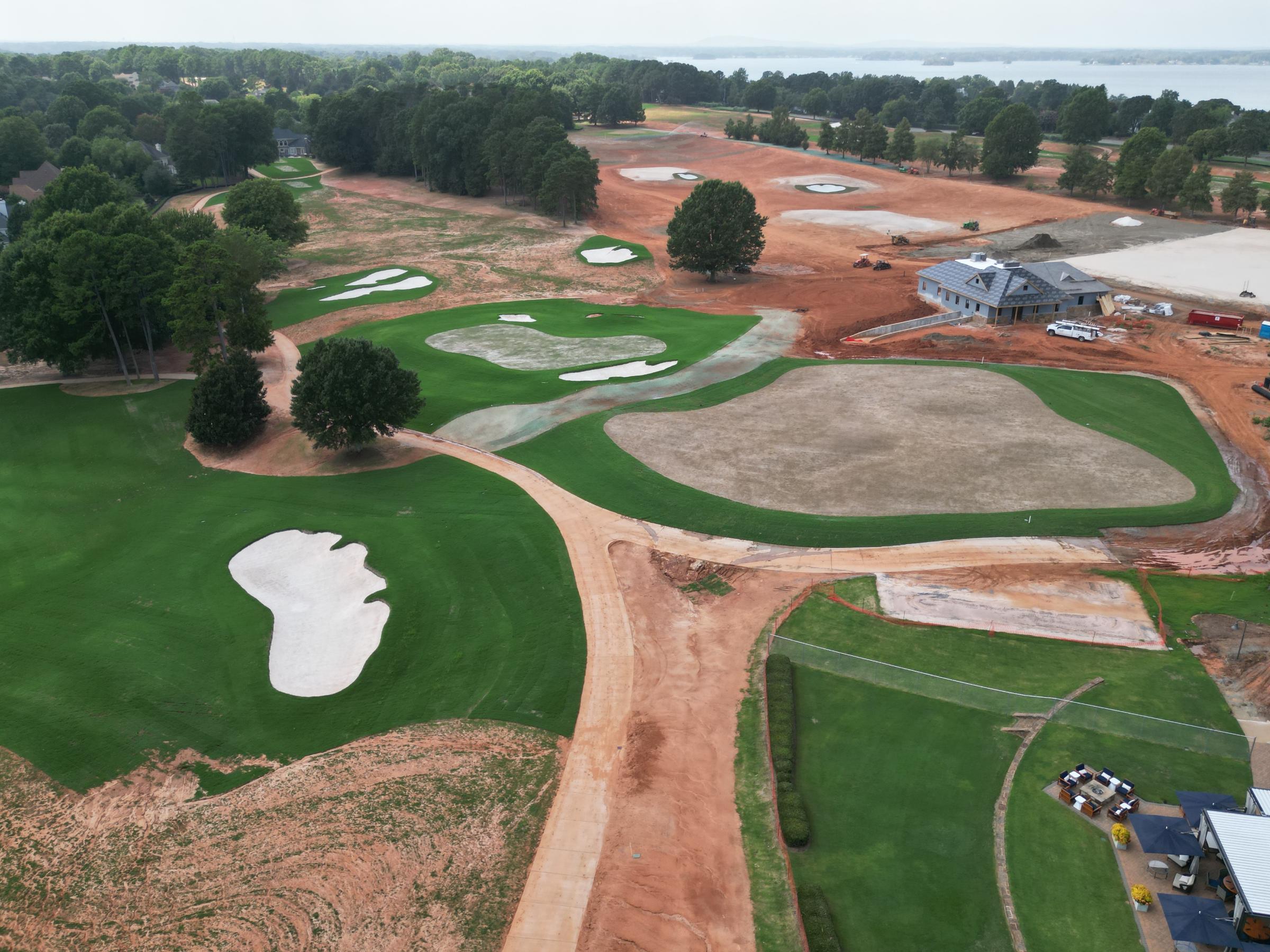

Why do we renovate & restore golf courses? When should we develop and implement master plans? The obvious answers are, like a house or other real estate, all properties need a facelift to stay fresh. However, it isn’t only addressing deferred maintenance that motivates the golf world to overhaul our favorite fields of dreams. Often, it’s the simple desire to compete or improve.
Sometimes, the motivation for implementing master plan projects is purely economic, based on keeping up with the competition, increasing or maintaining market share or enhancing revenues. In other cases, especially with private clubs, the motivation is also competition, but often simply to participate in the “space race” to enhance members’ “bragging rights”. Given the high frequency of golf and club renovation projects in recent years, I thought it would be interesting to ask some industry experts why they’ve recommended renovation, or in the case of owners and managers, why they embarked on their projects. I asked prominent golf course architects, club managers, golf and club owners, management firms and agronomists with whom we’ve worked to learn more about the motivation for renovation projects. Below are some of their many reasons.
- Deferred Maintenance:
- Safety & Related Issues:
- In-Fill Development – Revenue Generation:
- Natural Resources & Water Conservation:
- Transformation:
- Deteriorating Assets:
- To protect and preserve club assets:
- Membership Expectations
- New Experiences
- Infrastructure Upgrade – Including grassing or drainage improvements
- Agronomic or Structural failure of greens or bunkers
- When there is a Return on Investment (ROI) for a “heritage” design that has been neglected
- Improvements to maintenance efficiency and conditioning
- Improving playability (fun)
- To attract & retain membership
- To generate excitement & renewed interest
- Increases in Green Committee “IQ”
- Comparison to Other Clubs (“Space Race”)
- When the need for one capital item (i.e. Irrigation System) dictates additional renovations due to cost
- Course Capacity Issues (i.e. bunker banks and tee boxes needing expansion)
- Demand for Quality in some markets
- Differentiating yourself from the competition
- Flexibility from additional facilities (extra nine, short course, etc.)
While this list is far from comprehensive, it clearly illustrates the focus of varying perspectives. In almost all of these reasons, an underlying issue is deferred maintenance. As one respondent said, “We see facilities that are simply past their life cycle, whether in just a few areas, or course-wide.” There is an old saying, “Either you are in the golf business, or not…” That applies often when we see an outdated and broken irrigation system that is barely capable of operating, or bunkers that are so bad golfers are leaving.” Another prominent issue is safety. Adjacent homes are hit with stray shots and legal claims are made. It’s not uncommon for redesigns to occur (too late) after such incidents.
Certainly, part of the deferred maintenance category is infrastructure upgrade or replacement. Not as “sexy” as a complete renovation, the need to address infrastructure often results in the broader redesign/restoration/renovation of golf courses and clubhouses or the addition of new amenities as members want to feel like they’re getting something new for their money. From the private club world, membership desires, often for nothing more than bragging rights are a motivation for many renovation projects and members seeking new experiences, like golf simulators, fitness, pickle ball and more. Projects are rarely limited to one element of the club since disruption time can be minimized by “doing it all now”.
One area that was mentioned (just once) but seems to be popular is the addition of more holes or “short” courses, enabling clubs to increase capacity, accommodate casual golfers and be open for play during maintenance periods.
Whether private or public, courses need members/golfers, for the most part more than the members/golfers need the clubs. In today’s vibrant golf market that may not seem that important as tee sheets and membership rolls are bulging, however markets tend to experience cycles. Simply ensuring that attraction and retention of members & players is often a big reason for renovations. It could be that renovations can enhance maintenance efficiency and playing conditions and can correct problems like poor drainage or the introduce modern turfgrass varieties to enhance playing surfaces, minimize the risk of disease and use less water.
To my great surprise only 2 of the professionals I reached out to mentioned return on investment (ROI) as a primary motivating factor in renovation projects. Certainly, with member-owned private clubs, which are typically not-for-profit, ROI is not a consideration beyond either the membership’s appetite to foot the bill, or gain enough new members to pay for the project. It’s not unusual that renovation projects fail to enhance the market value of the property, which is not typically a primary concern. For investor-owned clubs or daily-fee courses, however, ROI is often the primary driving force behind renovation projects beyond addressing deferred maintenance.
Water conservation is an issue of ever-increasing importance, especially in the more arid climates. Not only are water resources becoming limited but the cost is rising quickly. Even in areas not thought to be water challenged, some courses are making modifications to prepare for what many believe is the inevitable point in time where water becomes more precious everywhere and limited supplies become the norm.
Timing (the “When” part of all this), can depend on several factors.
If a club is considering conversion from for-profit to tax exempt status. and improvements would enhance market value, it’s possible that renovations should wait until after the conversion is made. Of course, among the reasons many clubs have embarked on master plan projects is very simply because since the COVID surge in golf, the clubs could afford to. In many cases clubs and courses had delayed even the “required” projects hoping for better economic fortunes. COVID answered those prayers and many embarked on projects for both “required” (deferred maintenance) and “desired” capital improvements, often incurring substantial debt in the process. The best timing can be impacted by interest rates for borrowing, seasonal considerations, member alternatives (where else can they play?), and not least of all market considerations.
I believe that all clubs and golf courses should have in place master plans for the future which address both the physical plant as well as market and operational considerations. These plans should be updated regularly. Having a plan maintains consistent direction. Updating that plan regularly ensures “spending smart, not stupid.”
