

In several recent blog posts, I’ve addressed the treatment and impact on deferred maintenance relating to renovations, capital plans, planning reserves and more. One area where deferred maintenance can be your friend is in the course of a real estate tax assessment appeal.
Deferred maintenance is defined in The Dictionary of Real Estate Appraisal – 7th Edition as: Items of wear and tear on a property that should be fixed now to protect the value or income-producing
ability of the property, such as a broken window, a dead tree, a leak in the roof, or a faulty roof that must be completely replaced. These items are almost always curable. The key phrase here is should be fixed now. What this means is they need to be addressed now (as of the date of appraisal) which would likely result in a deduction from value of the cost to cure the item.
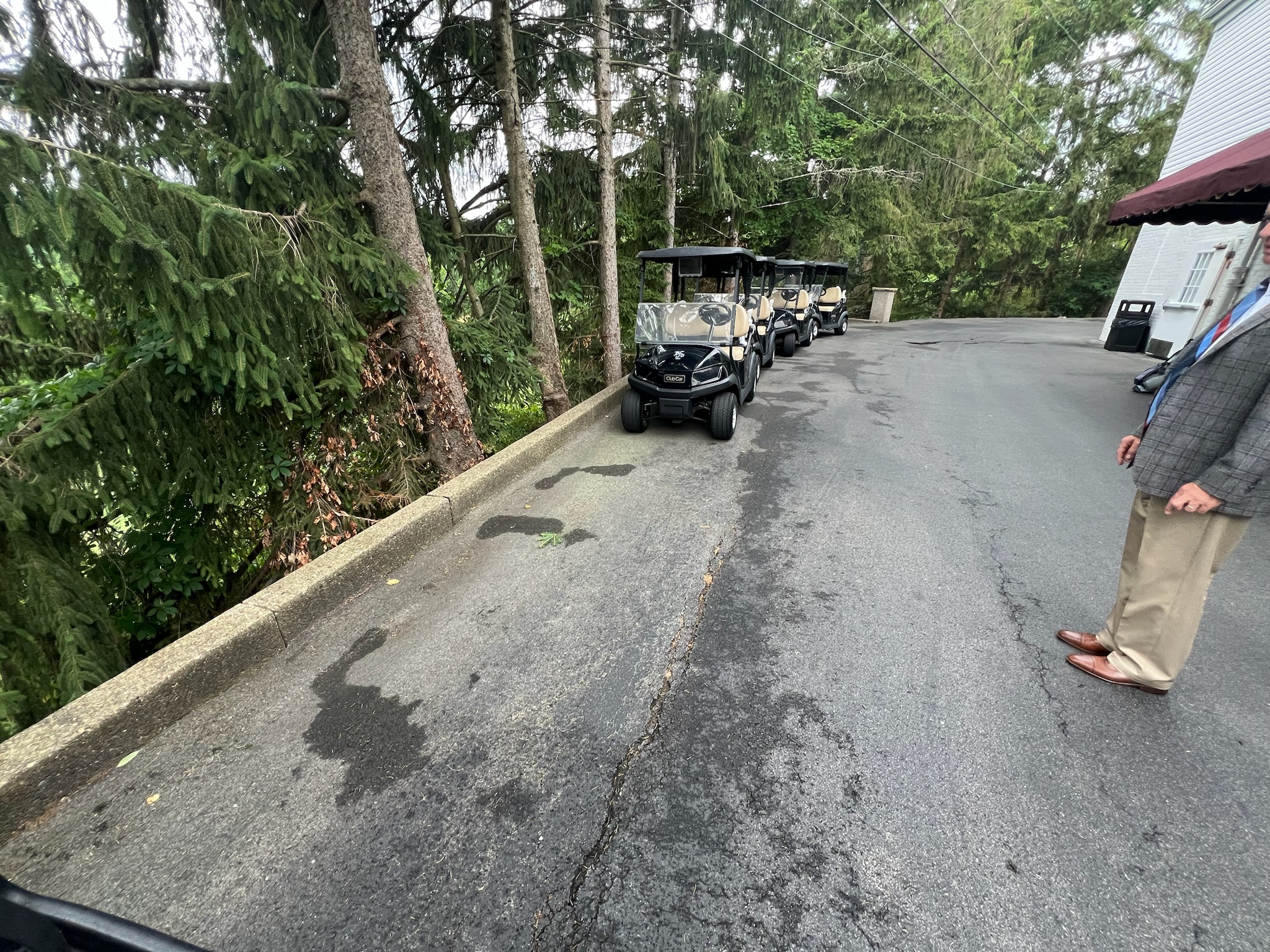
For golf properties, deferred maintenance is most often found in the areas of outdated or malfunctioning irrigation systems, dysfunctional greens or bunkers needing rebuilding and cart paths or parking areas that might require resurfacing and repair or that have simply reached the end of their useful life. If there are tennis courts or aquatic facilities, they also have a useful life and can require renovation or replacement. Buildings often need new roofing or HVAC and decorating may be in need of attention. Other items of deferred maintenance can include various items of personal property, like kitchen equipment, tables & chairs or maintenance equipment. We’ve observed lots of settlement issues, sometimes in dangerous areas adjacent to steep terrain that could result in failure of cart paths, parking areas or even buildings. They require immediate attention and can be costly to fix.
In most cases, when the tax assessor values a golf or club property, he/she employs a replacement cost analysis and since they’re often calculating their values simply from land/building areas and lists of improvements, they often overlook not only details about the improvements but also the physical condition and age. Not having the ability to focus on golf properties, the assessors may be unaware that golf course improvements (greens, tees, bunkers) and infrastructure (irrigation systems, cart paths) have finite lives that require replacement and rebuilding.
In most (if not all) states, the definition of market value used for tax assessments presumes a sale of the property. Accordingly, an accurate estimate of value for tax assessment purposes must reflect the actions of buyers and sellers in the marketplace. If an irrigation system is 30+ years old, according to the American Society of Golf Course Architects Life Cycle Chart it has reached the end of its useful life. Imagine the impact of losing the ability to irrigate in the middle of a hot summer. It could be catastrophic. A prudent buyer of the property would factor that into the purchase. Thus, the cost to replace that system equals the cost to cure and should impact a valuation for tax assessment accordingly.
The key here is to know where deferred maintenance exists and to document it, as of the relevant valuation date for tax assessment. If a club has contractor estimates to correct the issue, that’s ideal. I’ve been involved in numerous cases where items of deferred maintenance not only made the difference between having a legitimate case for contesting one’s assessment but made that case much easier for the taxing authorities to comprehend due to their usual reliance on cost analysis. It should be noted that even once deferred maintenance is cured, reserves should be set aside for future replacement of the item cured to avoid deferred maintenance in the future.
It should be acknowledged that deferred maintenance still needs to be addressed, and that once cured, any reduction in assessment accomplished in one year could be reversed in subsequent years, however, in many cases, the savings could be substantial and well worth the effort and investment in appealing the assessment. Remember that real estate taxes cannot be contested, only the assessment, which is based on market value can be appealed.
Another area where we’ve observed deferred maintenance as being (at least temporarily) helpful, is when private clubs are converting from a for-profit tax status to a not-for-profit tax status. In these cases, the club can avoid a tax liability if the fair market value of the club is less than the tax basis. The impact of deferred maintenance can sometimes make the difference. Thus, if your club has substantial deferred maintenance, at least temporarily, it can become your friend in an appeal of the assessment or conversion to non-taxable status.
