
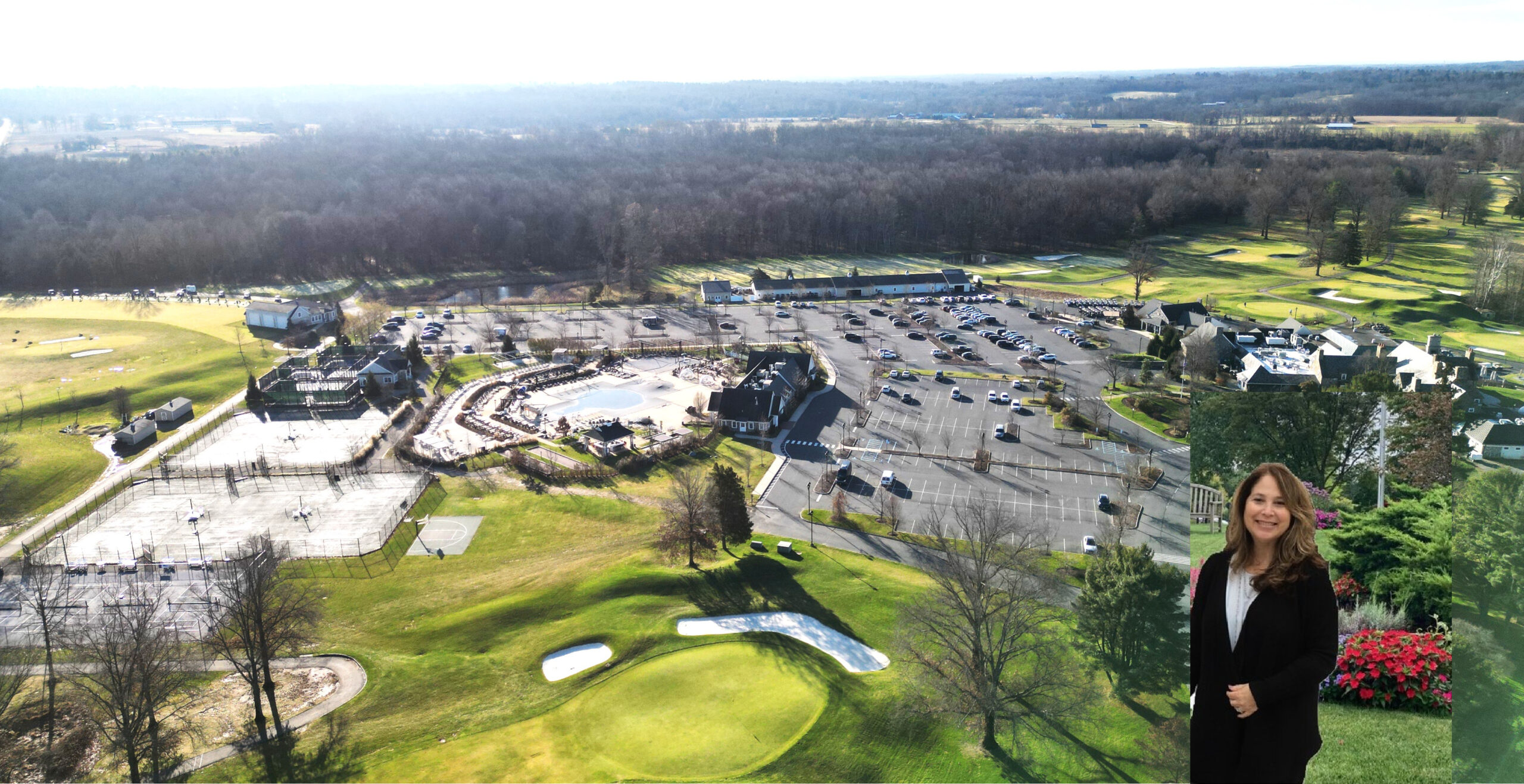

Every club should have a membership director. Unfortunately, not all do. Recently, while on an assignment I came across Allison Garber, membership director at Fiddler’s Elbow CC in New Jersey, who seems to understand the role as well as anyone I’ve encountered. Garber was nice enough to share with me some of the concepts she employs to make Fiddler’s Elbow among the most hospitable clubs I’ve ever visited.
While the position of membership director includes membership development (sales) Garber explains that “there is so much more to creating a strong, vital, and cohesive membership.” She focuses on the creation of a community (staff & membership), starting with a mandatory orientation, making everyone fully aware of “what’s offered, how to participate in all our programs, and the day-to-day use of the Club. When they leave the orientation, the goal is to make their transition to a Member seamless and leave them excited to enjoy the Club.” She follows up over the next 90 days to see if there’s any questions or feedback. Interestingly, I’ve never experienced that orientation at any of the clubs where I’ve been privileged to be a member.
Garber makes it a point to assist with staff and member introductions and diligently strives to make the club the members’ “happy place”. One question I posed was what’s the secret to the club being “all things to all members”? While not always a part of some clubs, listening to the members desires and needs and acting on them was the initial response. Keeping promises is key so that members don’t feel as though they’ve joined and then the rules change. Encouraging club usage and a cohesive membership is a long-term focus. Many boards at member-owned clubs, and sometimes even (short-sighted) owners have a “my way or the highway” attitude that does nothing but create animosity. Garber strongly advocates member exit interviews when a member resigns, and while the feedback, from her perspective, is rarely negative it’s important to hear. Usually, a member leaves simply because they seek a different culture (i.e. business versus family), relocate or identify different financial priorities.
Garber says that caring for all members individually supports the “all things to all members” philosophy, but in reality that’s not possible. However, promoting a diversity of offerings, recognizing an evolution of the membership and using “good common sense” is usually successful. Consistency and flexibility are encouraged and while they try to always say “yes” to member’s requests, the goal is to make decision in the best interests of the club as a whole. She emphasizes that it’s important that the goal is to always say “yes”, as opposed to “no”.
I asked Garber what is often the biggest objection to joining faced from a prospective member. She answered: “Probably, it’s more of their internal dialog about taking the next step. Often, they like to evaluate how much they would really use it verses the cost. It’s my role to highlight the value for them and encourage them to join but only if it makes sense. I want them here because they really want to be here. My goal is for them to be here for a long-time. I believe that creates a more cohesive membership.” She says that socialization is the primary reason for most members joining a club. She also indicated that while the rising cost of membership is an issue that many have chosen to give up things other than their membership. Garber emphasized that to the golfer analyzing their cost per round, at a private club may not be the best option, however if the club’s other activities (swimming, racquets, fitness, etc.) can factor into that equation, the club membership becomes more cost-effective, if still expensive. At Fiddler’s, Garber arranges member trips, makes introductions and as the membership director goes way beyond membership development responsibilities.
From the perspective of membership development Garber compares member-owned and investor-owned clubs as follows: “Having a Club family owned is such a gift. Members don’t have any assessments, bonds, board, or committees. We have a very strong management team that are experts in their specific area and work cohesively as a team. We get so much support from the trustees and they welcome Members to share their suggestions and feedback. As I mentioned, the best ideas often come from the membership. If it makes sense for the membership at large, they will gladly try it. In addition, having a family-owned Club, creates a family environment. It’s home to not only to the Members but the staff as well. The trustees set the tone with a welcoming and supportive environment for Members and Staff.”
Among the more valuable takeaways from my visit with Garber was her suggestion to read the book Unreasonable Hospitality by Will Guidara. After reading the book and subsequently attending a presentation by Guidara at the CMAA World Conference in 2024 I learned concepts that any business can employ to not only serve customers and clients better but also contribute to a fulfilling and satisfying career in any field of endeavor.
Of course, one big question is whether the COVID surge in club membership is sustainable. Garber addressed this by acknowledging that the surge has subsided but relaxing and enjoying waiting lists wasn’t an option, with Fiddler’s Elbow preferring to “find unique ways to make the experience even better so members never want to leave.” It would seem as though that’s a recipe for long-term success. With the possibility of a shorter (4-day) work week on the horizon, Garber actually predicts another surge in golf participation and club membership. Only time will tell.
The role of club membership director contains a diverse array of responsibilities and functions. If done well, Garber shows how the membership director can be an economic asset to the club well beyond the development of new memberships.
